April 14, 2012 – Bakhtmy, Iraqi Kurdistan
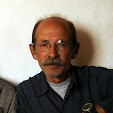
Younan stood by a pile of concrete-and-rebar rubble, the remains of the Assyrian village of Bakhtmy’s once largest church, St. George (Aita Mar Guargis).

“On May first, 1987, the Iraqi army destroyed our village of Bakhtmy. I was 25 years old. I will never forget it. They came to the village in the morning and gave us 3 hours to gather what we could and leave. They blew up the church with TNT.” “Did you watch?” “Yes, the entire village watched from over there,” Younan said pointing to a knoll a short distance away. “And they also blew-up the smaller church, St. Maria right over there. And over here is where our family home was. Like all of the other homes, they destroyed ours with a bulldozer. Bakhtmy was gone in one day.”
With the help of Younan and his brother I was able to imagine that what they still saw so vividly 25 years ago. Without them it would have been difficult, for Bakhtmy was rebuilt by the Kurdish Regional Government in 2007. Many many other villages wait in the queue..
It was Holy Saturday, the day before Orthodox Easter, which was to be celebrated that night at the new St. George church. Younan, visiting from Germany where he now lives, had returned to northern Iraq as he does every year. He invited me to spend the afternoon in the village with him and his brother, Yusef.
Ten minutes outside of the city of Dohuk, just past a heavily armed checkpoint, a prematurely weathered sign announcing the village, written in Arabic, Kurdish, and Assyrian, pointed west. We turned onto a narrow asphalt road casually draped over the rolling countryside and passed an area punctuated by mounds of rubble patiently being reclaimed by spring-green grass. “This was a Kurdish village,” said Younan. Ahead lay the new Bakhtmy. A new St. George church stood at the entryway to the village, and a white Assyrian flag with its red and blue lines rippling from its center lazed against a brushed blue sky.

Younan continued as two of his young nephews scampered nearby among the piles. Although he too experienced it all, Yusef was content to listen. “We took only what we could carry and began to walk to the north towards the town of Semel, where we lived in tents for 2 months before we could start building new homes. It was very hard.”
Eventually Bakhtmy and 9 other Assyrian villages became the collective village of Monsoria on the outskirts of Semel. The history of Semel itself is like holding up a small vanity mirror to the history of the upper Mesopotamian region over the past two millennia: Christian, competing Christian, Yezidi, Arab, Kurdish – each era wheeling about the other, each having its own intrigue, tragedy, violence, and death, and sometimes, resurrection.
Upon our arrival to the 150-home village, we wended through brightly colored houses on orderly unpaved streets. Passing through the lavender gate, Yusef’s wife and manicured garden welcomed us. Soon we were sitting at the kitchen table having lunch as Yusef’s wife continued to work in the kitchen, chatting with us all the while. This all had a sense of the mythical Phoenix rising from the ashes.

(Having just returned from spending time with the Yezidi Kurds in the Sinjar region several days prior, I could not help but think that their Phoenix remained buried in cold ashes.)
We finished our leisurely tour on a low hill a kilometer from the village - the site the St. Daniel chapel, also destroyed 25 years ago. Atop a tidy pile of rock rested a stone with a cross with “Aita Mar Daniel” in Assyrian script chiseled in. While lighting a devotional candle retrieved from a can secreted away in the rubble, Younan explained, “When we came back to St. Daniel’s, everything was destroyed except for this stone that stood over the doorway. We believe it was a miracle.”

Nearby was the grave of their grandfather who was the caretaker of the chapel. Yusef and Younan shared a wordless moment.
On December 2, 2011, Yusef’s liquor store in Semel was looted and burned. He lost everything and is still awaiting financial restitution from the government.
On that day a flash of religious tensions dimmed the skies in Iraqi Kurdistan. In several cities, including Semel, mobs of young Muslim Kurds targeted Christian and Yezidi establishments – primarily liquor stores, but homes and social clubs as well – burning and looting them, ostensibly for being in violation of Qoranic law. Other explanations are offered, but the result is the same: The embers of religious and ethnic strife continue to glow.

For 3 years in the late-1980’s, Saddam Houssein honed his despotic talents by executing his al Anfal campaign in northern Iraq. Although the Kurds numerically bore the brunt of al Anfal, all minorities, including the Assyrians, Yezidi Kurds, Shabaks, Jews, and others, felt the wrath of another tyrant gone mad. Through his infamous cousin, unfortunately dubbed in comic book fashion “Chemical Ali”, Saddam created a devil’s stew of horror which still leaves a toxic aftertaste: Chemical attacks on civilian populations; brutal military operations against the Kurdish peshmergha; the destruction of at least 4,000 villages with forced resettlement of populations to collectives; the relabeling of ethnicities; the involuntary wholesale relocations of other ethnic groups into unfamiliar terrains; and, mass disappearances and executions.
Younan stood by a pile of concrete-and-rebar rubble, the remains of the Assyrian village of Bakhtmy’s once largest church, St. George (Aita Mar Guargis).

“On May first, 1987, the Iraqi army destroyed our village of Bakhtmy. I was 25 years old. I will never forget it. They came to the village in the morning and gave us 3 hours to gather what we could and leave. They blew up the church with TNT.” “Did you watch?” “Yes, the entire village watched from over there,” Younan said pointing to a knoll a short distance away. “And they also blew-up the smaller church, St. Maria right over there. And over here is where our family home was. Like all of the other homes, they destroyed ours with a bulldozer. Bakhtmy was gone in one day.”
With the help of Younan and his brother I was able to imagine that what they still saw so vividly 25 years ago. Without them it would have been difficult, for Bakhtmy was rebuilt by the Kurdish Regional Government in 2007. Many many other villages wait in the queue..
It was Holy Saturday, the day before Orthodox Easter, which was to be celebrated that night at the new St. George church. Younan, visiting from Germany where he now lives, had returned to northern Iraq as he does every year. He invited me to spend the afternoon in the village with him and his brother, Yusef.
Ten minutes outside of the city of Dohuk, just past a heavily armed checkpoint, a prematurely weathered sign announcing the village, written in Arabic, Kurdish, and Assyrian, pointed west. We turned onto a narrow asphalt road casually draped over the rolling countryside and passed an area punctuated by mounds of rubble patiently being reclaimed by spring-green grass. “This was a Kurdish village,” said Younan. Ahead lay the new Bakhtmy. A new St. George church stood at the entryway to the village, and a white Assyrian flag with its red and blue lines rippling from its center lazed against a brushed blue sky.

Younan continued as two of his young nephews scampered nearby among the piles. Although he too experienced it all, Yusef was content to listen. “We took only what we could carry and began to walk to the north towards the town of Semel, where we lived in tents for 2 months before we could start building new homes. It was very hard.”
Eventually Bakhtmy and 9 other Assyrian villages became the collective village of Monsoria on the outskirts of Semel. The history of Semel itself is like holding up a small vanity mirror to the history of the upper Mesopotamian region over the past two millennia: Christian, competing Christian, Yezidi, Arab, Kurdish – each era wheeling about the other, each having its own intrigue, tragedy, violence, and death, and sometimes, resurrection.
Upon our arrival to the 150-home village, we wended through brightly colored houses on orderly unpaved streets. Passing through the lavender gate, Yusef’s wife and manicured garden welcomed us. Soon we were sitting at the kitchen table having lunch as Yusef’s wife continued to work in the kitchen, chatting with us all the while. This all had a sense of the mythical Phoenix rising from the ashes.

(Having just returned from spending time with the Yezidi Kurds in the Sinjar region several days prior, I could not help but think that their Phoenix remained buried in cold ashes.)
We finished our leisurely tour on a low hill a kilometer from the village - the site the St. Daniel chapel, also destroyed 25 years ago. Atop a tidy pile of rock rested a stone with a cross with “Aita Mar Daniel” in Assyrian script chiseled in. While lighting a devotional candle retrieved from a can secreted away in the rubble, Younan explained, “When we came back to St. Daniel’s, everything was destroyed except for this stone that stood over the doorway. We believe it was a miracle.”
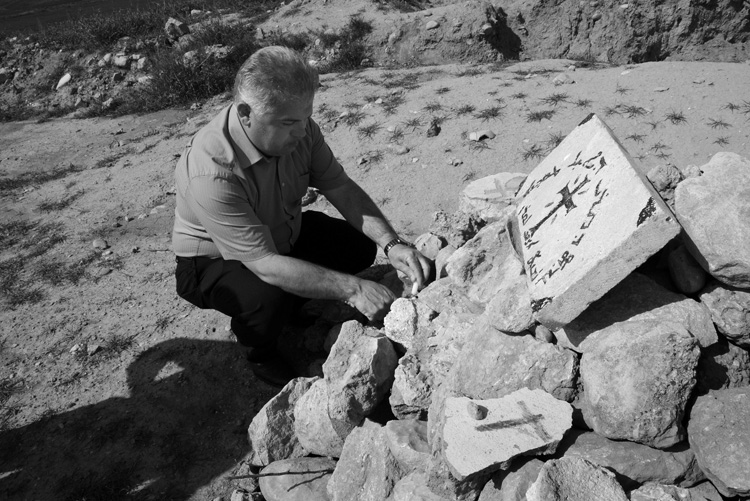
Nearby was the grave of their grandfather who was the caretaker of the chapel. Yusef and Younan shared a wordless moment.
On December 2, 2011, Yusef’s liquor store in Semel was looted and burned. He lost everything and is still awaiting financial restitution from the government.
On that day a flash of religious tensions dimmed the skies in Iraqi Kurdistan. In several cities, including Semel, mobs of young Muslim Kurds targeted Christian and Yezidi establishments – primarily liquor stores, but homes and social clubs as well – burning and looting them, ostensibly for being in violation of Qoranic law. Other explanations are offered, but the result is the same: The embers of religious and ethnic strife continue to glow.


 Posts
Posts